
Two of the most commercially significant candle formats in the UK market taper candles and jar candles present very different packaging challenges and opportunities. Each has its own structural requirements, its own retail and gifting conventions, and its own aesthetic language that packaging must align with to perform effectively.
Understanding these differences in depth allows UK candle brands to develop packaging strategies that serve each format optimally, rather than applying a one-size-fits-all approach that rarely works well for either.
This guide provides a comprehensive comparison of taper candle and jar candle packaging from a UK market perspective, covering structural considerations, material choices, design approaches, and the specific requirements of gifting and retail distribution.
The Distinctive Packaging Challenges of Taper Candles
Taper candles present packaging designers with a unique structural challenge: they are tall, slender, and almost always sold in pairs (or multiples of two). The conventional taper candle measures around 250-300mm in length with a diameter of 20-25mm at the base tapering to 8-10mm at the tip.
This aspect ratio very tall relative to its width does not sit naturally in standard box formats, which is why taper candle packaging has evolved its own distinctive conventions in the UK market.
The most common formats for taper candle packaging in the UK are elongated folding cartons (sometimes called "coffin" boxes in the trade) designed to hold two or more tapers side by side, and sleeve-over-tray constructions that allow the candles to be displayed in a formed tray before being enclosed in a printed outer sleeve.
Both formats need to hold the tapers securely without allowing them to rattle or move, as taper candles particularly those made from delicate wax blends or featuring surface decoration can mark easily if allowed to contact each other or the walls of the box.
Internal organisation is therefore central to taper candle packaging design. Formed cardboard trays with individual channels sized to the taper diameter are the most common solution for premium UK taper candle brands.
These hold each candle in its own defined space, prevent contact between candles, and create a polished presentation when the box is opened. The depth of the channel should be sized to hold the taper without clamping it a fit that is snug enough to prevent movement but loose enough for easy removal.
The Distinctive Packaging Challenges of Jar Candles
Jar candles present almost the inverse of the challenges posed by tapers. Where tapers are elongated and light, jar candles are compact and heavy particularly those in larger glass vessels. A typical UK jar candle in a 30cl glass vessel weighs 400-500g including the wax fill, and the glass itself is fragile.
These characteristics drive very different packaging priorities: the key challenges for jar candle packaging are structural strength (to support the weight of the vessel), impact resistance (to protect the glass from breakage in transit and handling), and presentation quality (to justify the typically higher retail price of jar candles in the UK market).
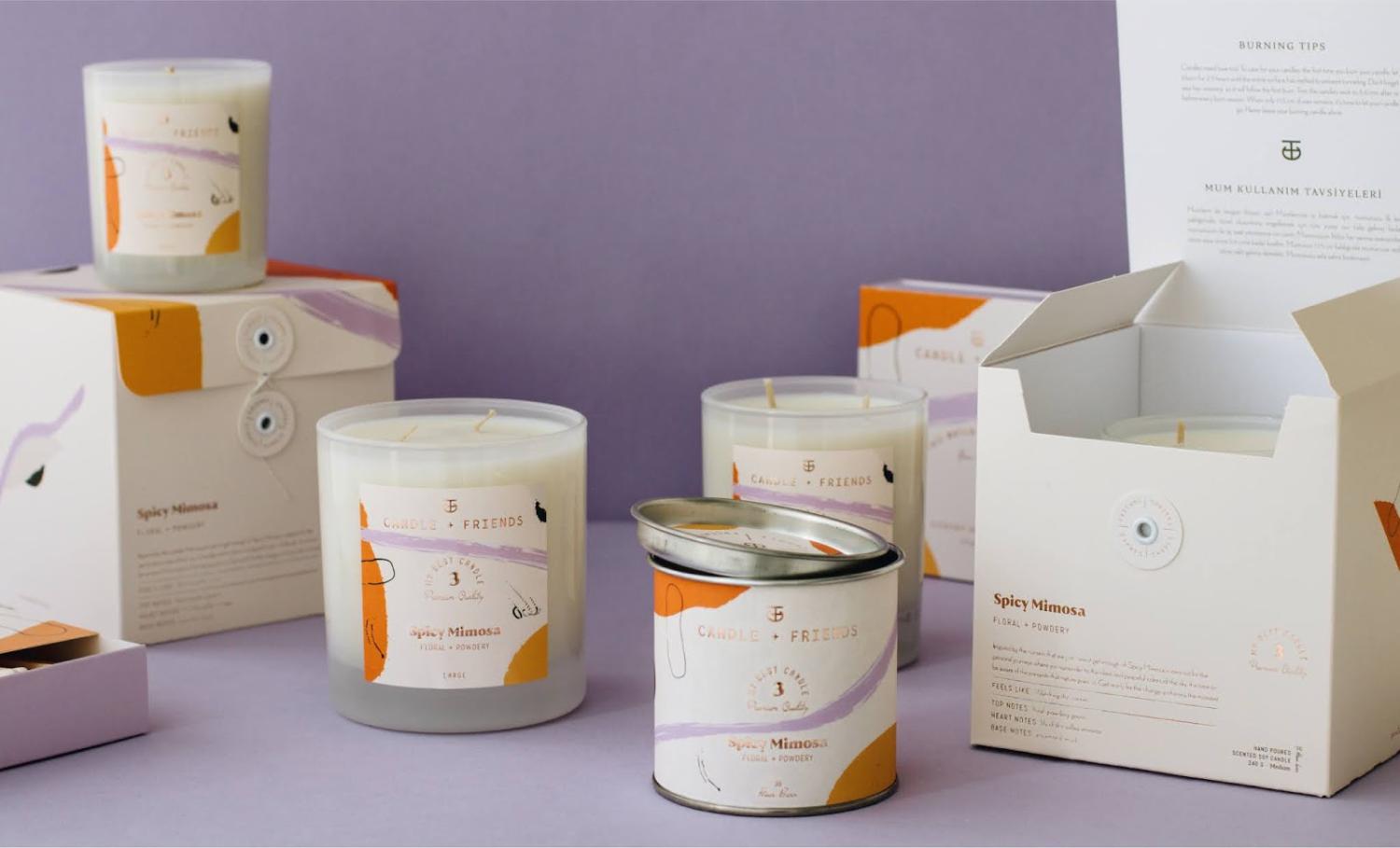
The solution to these challenges most commonly adopted by UK premium candle brands is the rigid two-piece box with a formed insert. The rigid construction provides the structural integrity and impact resistance that a glass jar candle requires, while the formed insert whether cardboard, foam, or a combination of both holds the jar securely in the centre of the box, preventing it from contacting the walls of the box even under impact. The result is a package that protects the product reliably while creating a premium unboxing experience.
Comparing Material Requirements
For taper candle packaging, the relatively modest weight of the product means that material requirements are primarily driven by protection from surface marking and breakage (tapers can be fragile, particularly near the tip) and by the need to maintain the box's dimensional integrity throughout the supply chain. Folding cartons in 300-400gsm board are typically adequate for most taper candle applications, with heavier boards or rigid construction reserved for premium positioned products.
For jar candle packaging, the weight of the product drives the need for more robust materials. Folding cartons for jar candles should use board in the 350-450gsm range as a minimum, and the structural design of the box including the lock-bottom or crash-lock base construction must be specified to support the filled weight of the jar.
Rigid boxes eliminate most of these concerns by virtue of their inherent structural strength, which is why they are the default choice for UK jar candle brands at the premium end of the market.
Design Approaches and Brand Language
Taper candles occupy a specific cultural and aesthetic space in the UK market. Associated with formal dining, romantic occasions, and traditional home decoration, they tend to attract packaging design languages that emphasise elegance, refinement, and occasion often using classical typography, metallic colour schemes, and minimal imagery.
The elongated format of taper boxes lends itself to portrait-orientation designs that emphasise vertical lines and use the full height of the box as a design canvas.
Jar candles span a wider range of brand languages, from artisan kraft aesthetics through mid-market lifestyle positioning to high-end luxury.
The compact, square or near-square format of most jar candle boxes lends itself to bold, full-surface designs with strong graphic treatments, and the format is well-suited to window cutouts that allow the vessel colour or label to be seen before purchase.
Gifting Formats and Multipack Packaging
Both taper and jar candles are popular gifts in the UK, but their gifting packaging conventions differ. Taper candles are most commonly gifted in pairs, sometimes presented together with a candle holder or snuffer as a complete gift set.
The packaging challenge in this context is creating a unified gift presentation that accommodates a combination of differently shaped items typically addressed through custom formed trays within a shared outer box.
Jar candles, particularly scented varieties, are most commonly gifted as single items or in collections of two or three complementary scents. Collection packaging where two or three jars are presented together in a single gift box is a strong commercial format in the UK, as it enables a higher transaction value while creating a more generous gifting presentation than a single candle.
The packaging challenge is creating a box that holds multiple jars securely while maintaining the premium presentation expected at the higher price point these collections typically command.
Practical Recommendations for UK Brands Packaging Both Formats
If you produce both taper candles and jar candles, the temptation is to develop a single packaging system that covers both typically to reduce complexity and cost. In practice, the structural and aesthetic requirements of the two formats are sufficiently different that a single packaging system almost always compromises on one or both.
The more commercially sound approach is to develop distinct packaging strategies for each format, sized and specified appropriately for the product and price point, while maintaining enough visual consistency between the two systems to communicate a coherent brand identity.
Working with an experienced UK packaging supplier who understands the specific requirements of taper and jar candle formats will help you make these decisions with the confidence of practical knowledge.
The custom candle boxes UK candle brands rely on for these premium formats are not off-the-shelf solutions they require thoughtful specification and a supplier who can translate your brand and product requirements into packaging that performs reliably in the real world.
Conclusion
Taper candle boxes and jar candle boxes serve different products, attract different customers, and operate in different retail and gifting contexts. Understanding and designing for these differences in structure, materials, and aesthetics is what separates packaging that elevates a candle brand from packaging that merely contains its products.
Invest in format-specific packaging strategies and your candle range will present more compellingly, protect your products more reliably, and create more memorable customer experiences across every format you sell.